















There has never been more focus on safety and compliance in social housing.
New legislation, revised standards and rising expectations are changing how landlords think about risk, responsibility and assurance. Awaab’s Law, the revised Housing Health and Safety Rating System, the new Competence and Conduct Standard, access challenges, data quality and building safety reform are often discussed separately. In practice, they are part of the same bigger shift.
The question is no longer simply whether activity has been completed. It is whether organisations can show that they understand the risks in their homes, have competent people making good decisions and can act quickly when resident safety is at stake.
That is why ASCP26 has been built around the questions now shaping the next phase of housing safety and compliance. Behind every dashboard, board report and assurance statement sit harder questions about evidence, judgement and confidence. ASCP26 is there to help the sector answer them.
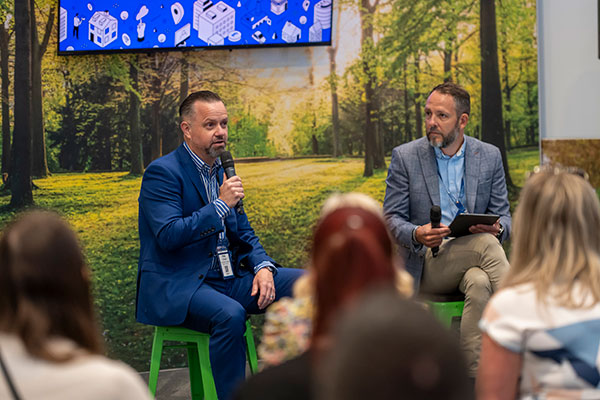
Taking place at ICC Newport on 8 and 9 September, ASCP26 brings together housing providers, regulators, government agencies, technical specialists, sector leaders and practitioners to explore not only what is changing, but what those changes mean in practice.
Are we ready for Awaab’s Law beyond damp and mould?
Awaab’s Law has already changed the conversation about landlord response, resident safety and accountability.
The first phase in England focuses on damp and mould and emergency hazards. For many organisations, that has meant looking again at reporting routes, triage, escalation, repairs processes, vulnerability, contractor management and communication with residents.
But this is only the start. Future phases will bring more hazards into scope, including excess cold and heat, falls, fire, electrical risks, structural concerns and hygiene-related hazards.
Awaab’s Law is not simply a repairs deadline. It touches almost every part of a landlord’s operating model. Contact centres, neighbourhood teams, contractors, surveyors, complaint handlers and compliance specialists may all be part of the evidence trail.
One of the most important concepts is “day zero”: the point at which the landlord becomes aware, or should reasonably have become aware, of a potential hazard. From that moment, systems, records, judgement and escalation all matter.
At ASCP26, delegates will explore lessons from implementation, what future phases could mean for landlords and how organisations can prepare for the accountability that comes with faster, legally enforceable timescales. The Awaab’s Law courtroom drama will bring that accountability to life, placing decisions, records and actions under scrutiny in a live legal scenario.

What does the revised HHSRS mean in practice?
The revised Housing Health and Safety Rating System is another important part of the same picture.
The move from 29 hazards to 21 is intended to make the system clearer and easier to apply. New baseline indicators and updated guidance should support more consistent assessment. But clearer does not necessarily mean lighter.
For landlords, the direction of travel is towards stronger evidence, clearer justification and a better understanding of how hazards affect residents in real homes. If a hazard is identified, organisations need to show how it was assessed, why decisions were made and what action followed.
Damp and mould, excess cold, excess heat, falls, fire, electrical safety and structural risks cannot be treated as isolated categories. They are connected to stock condition, resident vulnerability, repairs history, complaints, data quality and frontline observations.
At ASCP26, delegates will explore that wider hazard picture across disciplines, from damp and mould to fire, electrical safety, asbestos, radon and building safety.
Can we evidence competence when it matters?
The new Competence and Conduct Standard comes into force in October 2026, just weeks after ASCP26.
For many organisations, the immediate focus will be qualifications, training plans and transition arrangements. Those things matter. But competence in safety and compliance is broader than formal training.
It is about technical knowledge, professional judgement, behaviour, ethics and the confidence to challenge when something does not look right. It applies to in-house teams, contractors, managers and senior leaders.
ASCP26 offers up to 16 hours of structured CPD across two days, with learning across gas, electrical, fire, building safety, damp and mould, access, assurance, data, technology, leadership and culture.
For individuals, it supports professional development. For employers, it helps evidence that teams are actively engaging with the knowledge, behaviours and judgement needed to keep residents safe.
What happens when safety depends on access?
Every compliance professional knows the challenge of no access. Missed appointments, repeated letters, contractor visits, escalation and legal routes all take time and resource.
But access is not just an operational problem. It is a safety problem.
If a landlord cannot complete a gas check, electrical inspection, damp and mould investigation or urgent safety-related repair, the risk does not disappear. It remains behind the door.
The ASCP’s Access for Safety campaign has helped reframe that debate. It calls for a clearer, fairer and safeguarded legal route for prescribed safety checks and works where repeated reasonable attempts to arrange access have failed.
This is not about weakening residents’ rights or giving landlords sweeping powers. It is about recognising that safety duties cannot always be fulfilled if essential access remains out of reach.
At ASCP26, delegates will hear the latest developments from the campaign and explore the practical, legal and resident-focused questions that sit behind access.
Are our assurance reports telling the whole story?
High compliance percentages still matter. But on their own, they can create a false sense of confidence.
A 99 per cent completion rate may look strong, but the remaining one per cent can contain the highest risk. Which homes are outstanding? Why are they outstanding? Are vulnerable residents involved? Is access the barrier? Is the data reliable? Are there patterns the organisation has not yet seen?
The conversation across the sector is shifting from measuring compliance to building assurance.
That means understanding whether controls are working, whether data can be trusted, whether risks are visible and whether people feel able to challenge what the numbers appear to show.
ASCP26 will explore that shift through sessions on data, asset management, gas safety, electrical safety, fire, asbestos, radon, building safety and leadership.
How do we build a culture where safety decisions hold up?
Processes matter. Systems matter. Data matters. But culture determines what happens when the answer is not obvious.
Good safety cultures encourage people to speak up, ask questions, share concerns and learn before something goes wrong. They make space for professional judgement, not just process compliance.
That is why ASCP26 also looks beyond technical updates. Sessions from leaders, behavioural safety specialists and keynote speakers will explore decision-making, accountability, resilience and the conditions that allow people to do the right thing when pressure is high.
For social landlords, this may be the biggest challenge of all. The next phase of housing safety will not be managed by one team, one policy or one system. It will require organisations to understand the relationship between law, hazards, competence, access, evidence and culture.
ASCP26 is not a generic housing event with safety added to the agenda. It is the UK’s only conference dedicated solely to safety and compliance in social housing.
Full details and booking at ascp26.co.uk
Images © ASCP
- Log in to post comments