



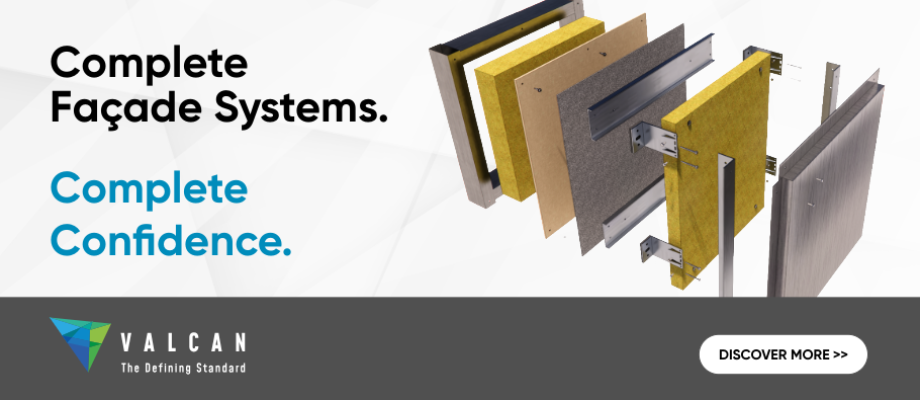










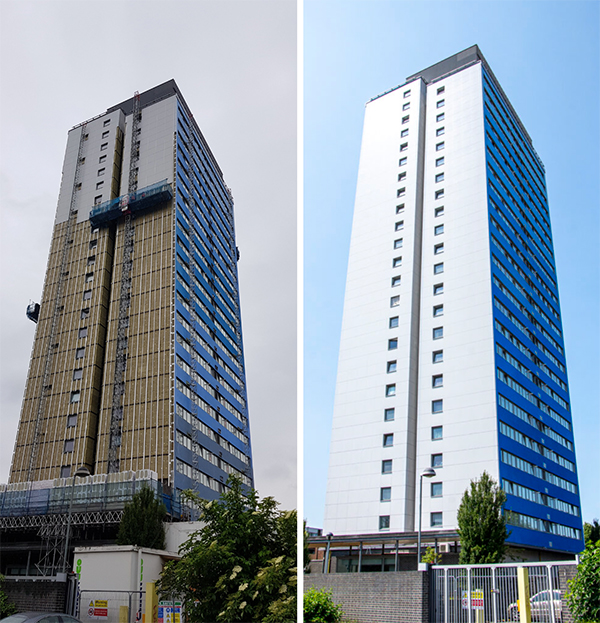
Ferrier Point, a 23 storey residential tower block in Newham, East London, became the focus of national attention during the cladding crisis after investigations revealed that its exterior was fitted with aluminium composite material (ACM) cladding, the same hazardous type implicated in the rapid fire spread at Grenfell Tower. In response, Newham Council undertook a full recladding programme, and by 2019 the building had been completely stripped of its ACM façade and upgraded with VitraDual® - an A1, noncombustible precoated aluminium rainscreen cladding system from Valcan.
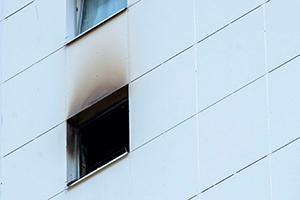
Only months after these remediation works were completed, the building faced a real test of its upgraded fire protection measures. On 22 June 2020, a severe fire broke out inside a flat on the 12th floor. Emergency services received multiple calls, and around 150 residents evacuated the tower before London Fire Brigade crews brought the fire under control. Flames escaped through the broken glazing and impinged directly on the building’s external façade - an especially dangerous scenario in highrise fires where combustible cladding has historically facilitated catastrophic vertical fire spread.
In the case of Ferrier Point, however, the newly installed VitraDual® system performed exactly as intended. The panels, classified A1 in accordance with BS EN 13501-1 alongside the newly installed insulation and firestopping elements prevented the outbreak from spreading beyond the originating flat. The system acted as a complete barrier to external fire travel, demonstrating full compliance with its noncombustible classification. While the interior of the affected flat was severely damaged, the façade itself remained intact, with no signs of fire penetration or propagation across the exterior envelope.
Residents expressed strong relief in the aftermath of the event. Some noted that had the fire occurred before the ACM cladding was removed, the outcome could have been devastating. One resident, interviewed after the incident, said that without the recladding, it “would have been another Grenfell,” reflecting the widespread public awareness of the risks posed by combustible façade systems and the life or death significance of remediation works. Their views echoed broader concerns raised nationally, where campaigners and safety advocates highlighted the Ferrier Point incident as a real world example of how replacing dangerous cladding can prevent a disaster.
By containing the flames within the footprint of the flat and preventing them from climbing the building externally, the VitraDual® system helped ensure the fire remained a single compartment event. This not only safeguarded residents on other floors but also protected the structural integrity of the tower and allowed firefighting efforts to remain manageable and effective.
The Ferrier Point fire has since been cited as a compelling example of successful fire safety remediation in high rise residential buildings.
Valcan VitraDual’s performance during the incident demonstrated how modern, fully tested, noncombustible façade systems can withstand real fire exposure and prevent external flame spread - the most significant mechanism behind several of the world’s most destructive cladding related fires.
As the UK continues efforts to remove unsafe cladding from hundreds of buildings, Ferrier Point serves as a powerful case study illustrating not only the necessity of such works but also the tangible life safety benefits achieved when high risk materials are replaced with robust, compliant alternatives.
Images © Valcan
- Log in to post comments