

















heating

Panasonic Aquarea Heat Pumps provide sustainable heating for homes in Cambridgeshire
paragraphs

In conjunction with East Cambridgeshire District Council, Palace Green Homes is in the final phase of a new 54-home residential development in the village of Haddenham, Cambridgeshire, with 19 affordable housing properties for the Haddenham Community Land Trust (CLT). The Team at Panasonic and Specialist heating and cooling distributor Oceanair, worked with CG Plumbing to provide each property with sustainable heating thanks to Panasonic’s Aquarea Mono-bloc air to water heat pumps which supply heating and domestic hot water to each home.
Categories
Fit for the future – Vaillant partnership helps Gasway take green mainstream
paragraphs

Amidst growing debate around how we tackle the climate challenge, a unique partnership between Vaillant and Gasway has demonstrated the importance of innovation and collaboration in helping the industry achieve its carbon neutral future.
Founded in 1982, Gasway is the largest heating company in East Anglia with a proven track record, delivering excellence in heating systems including domestic gas, renewables and commercial heating.
In 2016 the business was acquired by Flagship Group, a housing association with over 32,000 homes in the region, supporting its vision of solving the housing crisis in the East of England.
With this number of homes, it is vital to have a leading heating manufacturer on board to meet the full heating specification requirements of the homes, while also enabling Gasway to continue to serve the private market.
Categories
Panasonic and Schneider Electric partner to expediate the future of heating
paragraphs

With consumer demand for heat pumps at an all-time high, Panasonic has partnered with Drayton by Schneider Electric to offer its Wiser room-by-room heating control system. Seamlessly integrating with Panasonic Aquarea Air Source Heat Pumps and the Aquarea Smart Cloud and Service Cloud apps, the Wiser system provides an additional element of energy control and simple home automation.
Categories
PAVATEX: addressing overheating in UK homes
paragraphs
Compared to pre-industrial times, average land temperatures have risen about 1.2 °C. By 2052, global temperatures will likely exceed pre-industrial levels by 1.5 °C. The Met Office is warning that heat waves will become more frequent and more intense, predicting prolonged heat waves every other year from 2050 onwards, with temperatures exceeding 40 °C. How will the UK housing stock fare in all this? Not well, as two major 2021 studies have shown.
Categories
- Read more about PAVATEX: addressing overheating in UK homes
- Log in to post comments
Air source heat pumps...a logical option for social housing
paragraphs
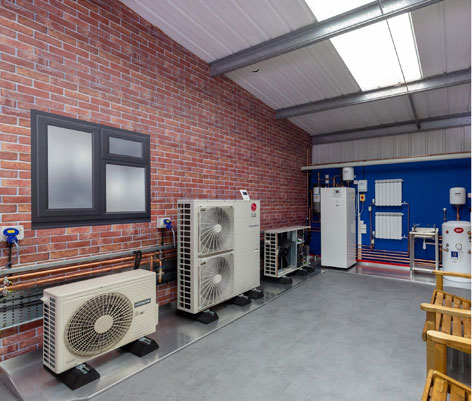
The heat pump revolution is underway in the UK with more and more housebuilders and social housing providers opting for heat pumps rather than the traditional fossil fuelled gas and oil fuelled boilers. The Government has introduced legislation that will see boilers phased out by 2025 in new build properties, but sensibly, many developers are getting ahead of the game and future proofing their new homes and in many cases the heating system upgrades on existing homes as well. The new, easy to install, highly energy efficient air to water heat pumps available now are proving to be hugely popular, with Unitherm already picking up a number of sizeable contracts from social housing providers. And it’s been Unitherm’s ‘All U Need’ approach - full supply, design heat pump package, with a simple to install system and full technical support that is proving popular.
Categories
Heat Networks: Acceptance testing important to the performance of the system
paragraphs
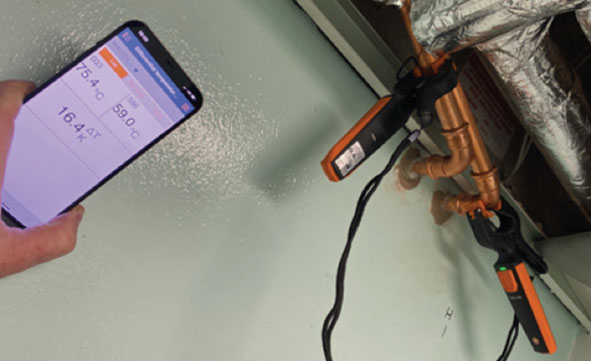
The UK Government has identified that heat networks have an important part to play in the provision of low carbon heating. This is supported by government grant schemes like the Heat Network Delivery Unit (HNDU), the Heat Network Efficiency Scheme (HNES) and the Green Heat Network Fund (GHNF). There is also a separate scheme in Scotland providing £300m of funding for heat networks.
Categories
Copyright © 2026. All rights reserved.
Designed By Euromedia Associates Ltd